


The automotive industry faces a massive period of fiscal and technological recalibration. Many manufacturers once promised an immediate and total shift to electric power. However, consumer demand and infrastructure gaps have recently cooled these ambitious timelines. This cooling market led to a comprehensive Honda EV strategy reassessment 2026 announcement. Such financial adjustments reflect a broader industry struggle to balance innovation with profitability. Companies must now navigate shifting trade policies and high production costs. This article explores how legacy brands are currently recalibrating their green energy roadmaps. We examine the specific drivers behind these multi-billion dollar strategic pivots today.
The Fiscal Reality of the Honda EV Strategy Reassessment 2026
Global carmakers are reporting massive impairment charges on their balance sheets this year. These losses stem from over-ambitious battery production targets and slower sales. Consequently, the Honda net loss forecast 2026 has shocked many market analysts. The company expects a total loss of up to 2.5 trillion yen. This massive figure highlights the risks of rapid industrial transformation. Therefore, executives are now taking a more pragmatic approach to capital management.
Honda and its peers are currently auditing their electric vehicle investments closely. Many previous valuations of battery plants no longer match current market realities. Meanwhile, high interest rates continue to suppress consumer spending on premium models. Consequently, the Honda EV strategy reassessment 2026 serves as a necessary financial reset. It allows the firm to align its assets with actual demand. This transparency is vital for maintaining long-term investor confidence during volatility.
Impact of North American EV Model Cancellations on Growth
The North American market has become a primary battleground for electrification. However, shifting political climates and regulatory easing have complicated this expansion recently. We are now seeing high-profile North American EV model cancellations across the board. Honda recently decided to scrap three major electric projects in this region. This includes the cancellation of the Honda 0 SUV and Saloon. Moreover, the planned Acura RSX electric variant will no longer proceed.
These cancellations signal a retreat from high-risk, all-electric ventures in the short term. Therefore, brands are refocusing their resources on proven revenue generators. Maintaining a massive fleet of unsold EVs is simply not sustainable. Consequently, the logic behind the Honda EV strategy reassessment 2026 applies here. Manufacturers are choosing to take losses now to prevent deeper future deficits. This move preserves the cash needed for future technological breakthroughs in mobility.
Structural Changes Following the Honda 0 Series Suspension
Specific product lines are feeling the brunt of these strategic revisions today. The Honda 0 Series suspension represents a major blow to earlier branding efforts. These models were supposed to define the next generation of Japanese mobility. However, the business environment has turned increasingly hostile toward pure battery platforms. Therefore, the company had to make a difficult but necessary choice.
Suspending these projects allows engineers to focus on more urgent software needs. Competitive pressures from China have exposed weaknesses in traditional manufacturing cycles. Meanwhile, software-defined vehicle technology has become the new standard for luxury buyers. Consequently, the Honda EV strategy reassessment 2026 environment rewards agility over rigid plans. Brands that fail to adapt their software offerings risk total irrelevance.
Understanding the Honda Automobile Electrification Pivot
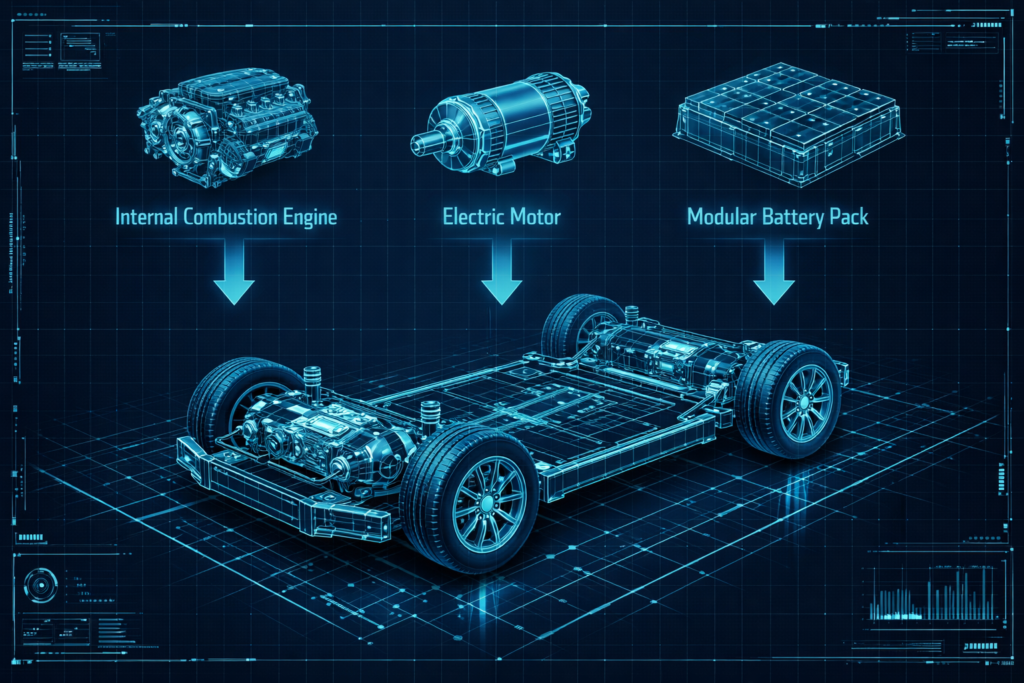
Honda is currently undergoing a radical Honda automobile electrification pivot in response. This strategy involves a total reassessment of resource allocation globally. The firm originally prioritized battery-electric platforms for almost every new segment. However, the lack of charging infrastructure has hampered mass adoption. Therefore, the company is rebalancing its portfolio to include more flexible options.
This pivot includes a renewed focus on regional market strengths. For instance, India is now a central pillar for future growth. Consequently, the logic of the Honda EV strategy reassessment 2026 emphasizes regional pragmatism. Manufacturers are recognizing that "one size fits all" strategies do not work. Different regions require different speeds of transition to sustainable power. This realization is forcing a return to hybrid and efficient combustion.
Strategic Benefits of the Honda EV Strategy Reassessment 2026
Taking a massive write-down is often seen as a sign of failure. In reality, it can be a tool for future resilience. The Honda EV strategy reassessment 2026 creates a cleaner financial slate for upcoming years. It acknowledges that the "first wave" of EV adoption has peaked. Therefore, the company can now set more realistic earnings targets for 2027. This move reduces the pressure to force products into a reluctant market.
Moreover, these financial corrections free up capital for diversified research. Companies are now looking beyond lithium-ion batteries for future solutions. They are exploring hydrogen, solid-state cells, and even carbon-neutral fuels. Consequently, the Honda EV strategy reassessment 2026 facilitates a broader view of sustainability. It shifts the focus from "how many EVs" to "how much profit." Sustainable companies are the only ones that can eventually go green.
Prioritizing Next-generation Hybrid Model Expansion
Hybrids have emerged as the surprise winners of this current decade. Consumers appreciate the fuel savings without the burden of range anxiety. Therefore, a next-generation hybrid model expansion is now the top priority. Honda and its competitors are both accelerating their gasoline-electric hybrid offerings. These vehicles provide the immediate cash flow needed to survive this transition. Consequently, they serve as a bridge to a more electrified future.

Manufacturing hybrids is also more cost-effective for legacy production lines. It utilizes existing engine expertise while introducing electric efficiency. Meanwhile, government regulations in many regions still incentivize hybrid adoption. Therefore, this shift is both a consumer and a regulatory win. The Honda EV strategy reassessment 2026 context makes this hybrid push even more vital. It provides a stable foundation while the battery market matures.
Financial Recovery and Executive Accountability
A loss of this magnitude requires strong leadership and sacrifice. At Honda, top executives have already volunteered to return their compensation. This includes the President and Vice President taking a 30% pay cut. Such moves are designed to show solidarity with struggling shareholders. Consequently, the period following the Honda EV strategy reassessment 2026 tests corporate culture. Accountability at the top can help stabilize a workforce during uncertainty.
These companies are also implementing aggressive cost-cutting measures across all departments. This includes streamlining supply chains and reducing redundant management layers. Therefore, the goal is to create a leaner, more responsive organization. Meanwhile, they must protect their dividend payouts to keep investors engaged. Consequently, the fiscal discipline of 2026 is driving a total corporate overhaul. This level of discipline will define the winners of the 2030s.
Long-term Resilience Following the Honda EV Strategy Reassessment 2026
The automotive sector is no stranger to cyclical downturns and shifts. However, the current transition is the most complex in its history. The Honda EV strategy reassessment 2026 marks the end of the initial EV hype. We are now entering a phase of mature, market-driven development. Therefore, companies are focusing on what customers actually want to drive. This ensures that the next wave of innovation is economically viable.
Success in this era requires a mix of patience and boldness. Manufacturers must continue to innovate even while they cut current costs. Moreover, they must stay ahead of rapid software advancements from new rivals. Consequently, the Honda EV strategy reassessment 2026 should be seen as a strategic pause. It is a moment to reload and refine the path forward. Meanwhile, the industry remains committed to a carbon-neutral destination.
Navigating the Future of Sustainable Mobility
The road to electrification was never going to be a straight line. Market forces, geopolitics, and consumer habits are all constantly shifting. The Honda EV strategy reassessment 2026 proves that even giants must be flexible. By embracing a multi-energy strategy, companies can better handle these fluctuations. Therefore, the focus has shifted toward agility and operational excellence. This pragmatism is the only way to fund a greener tomorrow.
Industry leaders are now looking toward the press conferences of late 2026. These events will outline the next decade of mobility strategy. Consequently, the lessons learned from recent write-downs will be very clear. They will emphasize profitable growth over raw electric vehicle sales volume. Meanwhile, the transition will continue, but at a more human pace. Therefore, the Honda EV strategy reassessment 2026 is a vital chapter in automotive history.
Reference Source:
This article references insights reported in: https://global.honda/en/newsroom/news/2026/c260312eng.html
This is a very insightful analysis of Honda’s evolving EV strategy. The article clearly explains how shifting market conditions and slower EV adoption are forcing even major automakers to rethink their electrification plans. The discussion about hybrid expansion and technology investments provides useful context for understanding Honda’s long-term mobility vision. As the global automotive industry navigates the EV transition, balanced strategies like this could play a crucial role in maintaining profitability while still moving toward sustainability. Great breakdown of the market dynamics.